Description
Urdu vs English Wedding Invitation Cards in Pakistan: Which Style Is Right for Your Event?
Choosing between Urdu vs English wedding invitation cards is one of the most important decisions when planning a wedding in Pakistan. Your card is not just a piece of printed stationery — it reflects your family style, the tone of the event, and the first impression guests receive before the ceremony begins. Whether you are preparing for a barat, walima, or nikkah, the right invitation language can make your card feel more traditional, more modern, or perfectly balanced between both.
For many families, the question is simple: should the invitation be written in elegant Urdu, clean English, or a bilingual format? The answer depends on your audience, event style, family preference, and the overall design you want to present. If you are exploring wedding card printing in Pakistan, understanding the strengths of both styles will help you choose the best option for your event and your guests.
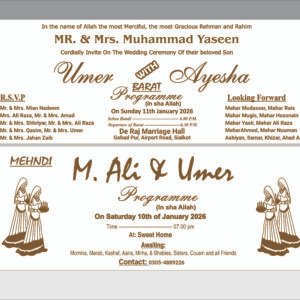
At Malik Art printing services in Sialkot, couples and families can order customized wedding cards for different events with options for names, dates, venue details, paper quality, matching envelopes, and even bilingual wording where needed. If you want to explore available wedding styles, see the full wedding card printing in Pakistan collection.
Why Urdu Wedding Invitation Cards Remain Timeless
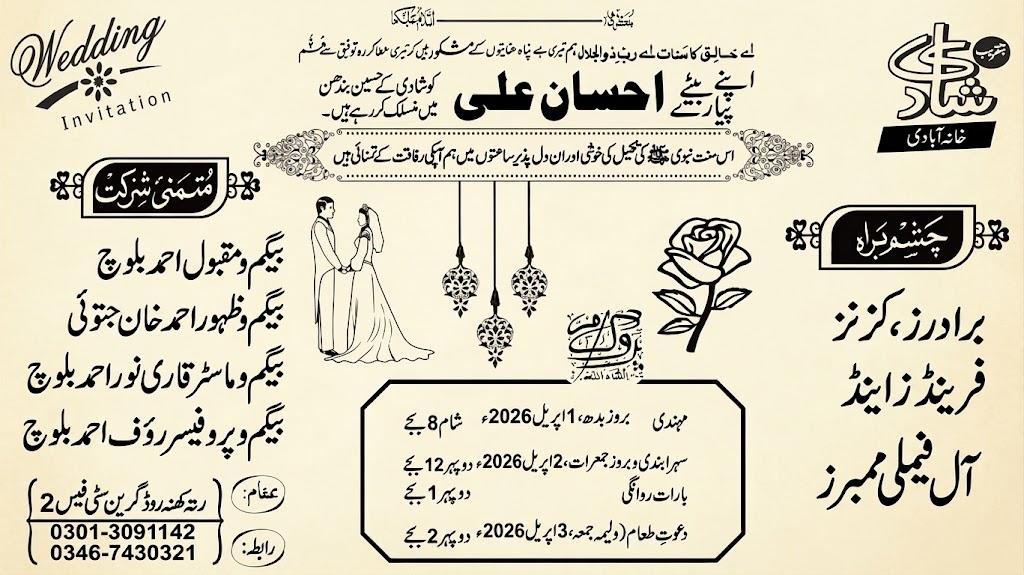
Urdu wedding invitation cards hold a special emotional and cultural value in Pakistan. They feel traditional, graceful, and deeply connected to family customs. For formal events like barat, nikkah, and even classic walima functions, Urdu text often gives the card a more respectful and elegant tone.
Urdu invitations are especially popular when families want the card to feel rooted in culture and easy to relate to for elders and relatives who prefer reading formal event wording in Urdu. They also work beautifully with classic wedding layouts, floral borders, traditional motifs, Islamic openings, and formal family introductions.
A well-designed Urdu card usually creates a richer ceremonial feeling because the language itself carries a traditional rhythm. If your event style is formal, family-oriented, or culturally classic, Urdu may be the stronger option.
Why many families choose Urdu cards
- They feel more traditional and ceremonial
- They suit classic Pakistani wedding functions
- They connect well with parents, elders, and extended family
- They work beautifully with formal invitation wording
- They often look premium with floral, gold, or heritage-style layouts
Urdu cards are ideal when you want your invitation to look deeply rooted in Pakistani wedding culture while still appearing elegant and professionally printed.
Why English Wedding Invitation Cards Are So Popular
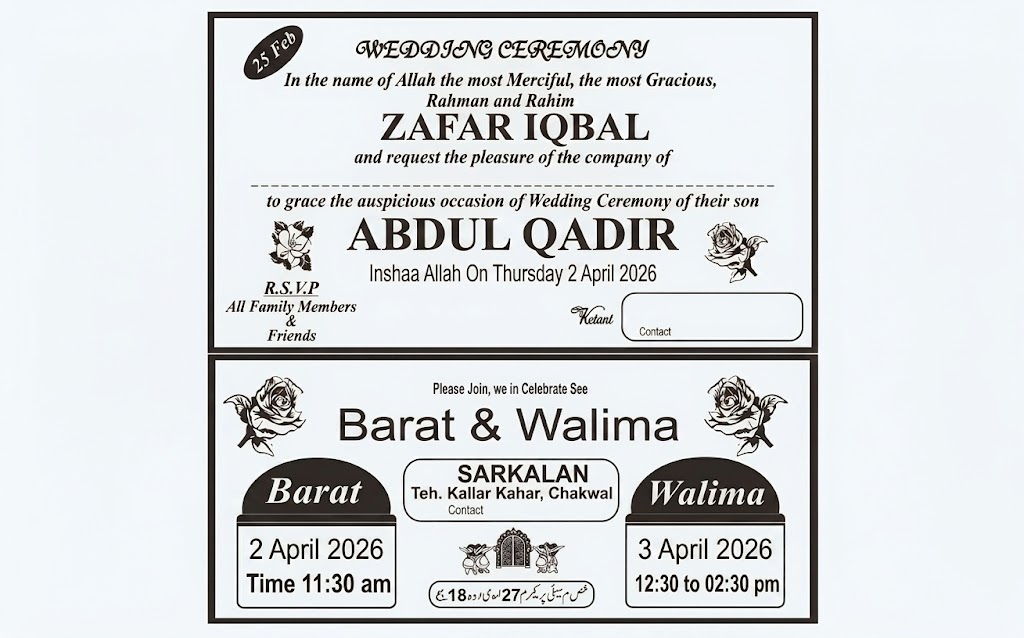
English wedding invitation cards are popular because they feel clean, modern, and easy to read. They are an excellent choice for couples who want a simple, stylish, and contemporary invitation layout. English cards are commonly selected for minimal wedding card designs, destination events, modern receptions, and family events where guests include friends, colleagues, overseas relatives, or younger audiences.
A simple English card design also works very well with digital printing, soft color themes, modern typography, and matching envelopes. If your wedding style is refined, minimal, or premium without heavy decoration, English often gives a crisp and balanced presentation.
Many people also prefer English cards because they allow event details like date, time, and venue to be arranged in a very readable format. This is especially useful when the card design is clean and information-focused.
Why English cards perform so well
- They look modern and premium
- They are easy to read at a glance
- They match minimalist wedding themes
- They work well for formal and semi-formal receptions
- They are ideal for couples who want a soft, elegant, uncluttered layout
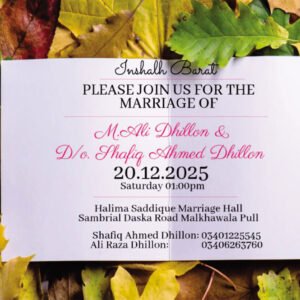
If you like a clean design approach, you can also review a simple wedding invitation card design style for inspiration.
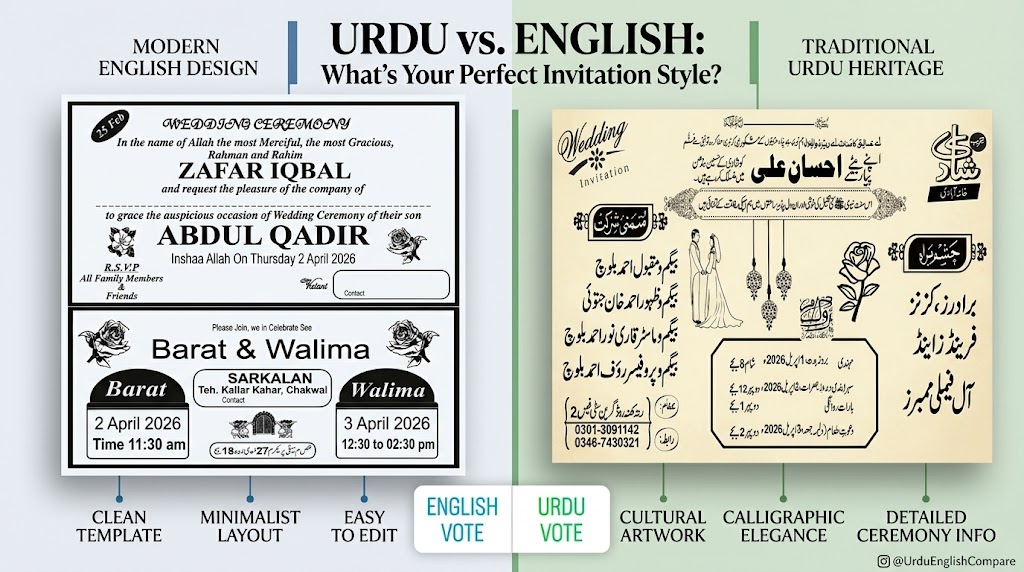
Urdu vs English Wedding Invitation Cards: The Main Difference
When comparing Urdu vs English wedding invitation cards, the right choice depends on the mood of the event and the people receiving the invitation.
Choose Urdu if:
- your family prefers a traditional style
- the event is formal and culturally classic
- you want a more emotional and heritage-inspired tone
- most guests are comfortable with Urdu wording
Choose English if:
- you want a clean, modern presentation
- your event theme is minimalist or premium
- you need simple readability for mixed audiences
- your guest list includes overseas or younger invitees
Choose bilingual if:
- you want the elegance of Urdu and the clarity of English
- your guest list includes both traditional and modern readers
- you want one design adapted for multiple events
- you want the card to feel premium and inclusive
This bilingual option is already aligned with Malik Art’s wedding-card service, where custom names, event details, bilingual text, envelope matching, and proof approval are part of the offered customization process. Source
Which Style Works Best for Barat, Walima and Nikkah?
Barat Invitation Cards
For barat events, both Urdu and English work well, but the style depends on the family’s tone.
If the event is formal and traditional, Urdu usually feels more natural.
If the event is modern and elegantly simple, English makes the card look clean and premium.
Walima Invitation Cards
Walima cards often look beautiful in English because the event style is usually soft, refined, and reception-focused. A minimal English layout with light florals and balanced typography is a very strong option for walima invitations.
Nikkah Invitation Cards
Nikkah cards can look excellent in Urdu, especially when the family wants the design to feel spiritual, respectful, and rooted in tradition. English also works well for modern nikkah events, but Urdu often creates a stronger ceremonial tone.
Can You Use Urdu and English on the Same Wedding Card?
Yes — and in many cases, this is the best option.
A bilingual card lets you maintain the beauty of Urdu while keeping the details easy to read in English. This is ideal for families who want a culturally respectful invitation that also feels modern and accessible. One language can be used for the main invitation wording, while the second language can support event details such as venue, date, or RSVP information.
Bilingual layouts are especially helpful when:
- elders prefer Urdu
- younger guests prefer English
- relatives are coming from abroad
- one design needs to be adapted for multiple functions
Malik Art’s existing wedding-card service already mentions bilingual text options and the ability to adapt one design for barat, walima, mehndi, and nikkah with consistent wedding branding. Source
Important Design Elements for a Professional Wedding Card
No matter which language you choose, a professional invitation card should include:
- clear names of bride and groom
- family names or hosting family details
- event title such as barat, walima, or nikkah
- complete date and day
- event timing
- venue name and address
- contact number if required
- matching envelope for a refined presentation
A clean layout is more important than too much decoration. Good spacing, proper font choice, and readable information always improve the final printed result.
Best Printing Style for Simple Wedding Cards
For simple and elegant invitations, digital printing is often a very practical choice. It is suitable for:
- short to medium quantity orders
- clean modern layouts
- crisp text quality
- soft floral designs
- event cards with matching envelopes
- quick turnaround requirements
On the existing Malik Art product page for a simple wedding invitation, the card style emphasizes a clean English heading, elegant script names, light floral corners, readable venue details, customizable colors, and matching envelopes. The page also notes that the design can be adapted for barat, walima, mehndi, or reception and may include Urdu text if requested. Source
How to Decide the Best Language for Your Card
If you are still unsure whether to choose Urdu or English, ask yourself these questions:
- Who are the main guests receiving the invitation?
- Is the event traditional, modern, or a mix of both?
- Do you want the card to look more cultural or more minimal?
- Will the card be used for one event only or multiple wedding functions?
- Do you want one language or a bilingual format?
If your answer leans toward tradition, Urdu is usually stronger.
If your answer leans toward clarity and simplicity, English is often the better choice.
If you want both elegance and flexibility, bilingual is the safest and most professional route.
Why Custom Wedding Cards Matter More Than Generic Designs
A custom card helps your event feel personal. It allows you to choose:
- wording style
- language preference
- paper quality
- print finish
- color palette
- envelope type
- event-specific details
This matters because wedding invitations are not just informative — they are part of the overall wedding experience. A custom card creates consistency between your event style and your guest communication.
If you want professionally printed, customizable wedding invitations, visit the wedding card printing in Pakistan section and review your options before finalizing the text.
Why Choose Malik Art for Wedding Card Printing in Pakistan
Malik Art highlights more than 70 years of printing experience, custom design support, fast turnaround, and print services for clients in Pakistan and abroad. The brand also offers wedding cards, labels, business cards, packaging, and offset or digital printing from Sialkot, making it a reliable option for families who want custom wedding stationery from an experienced printing partner. Source
For wedding-card orders, Malik Art’s site also provides direct contact methods including WhatsApp, phone numbers, email, and the Sialkot address, making it easy to request a quote for your preferred card style. Source
Final Thoughts
When it comes to Urdu vs English wedding invitation cards, there is no single right answer for every wedding. The best choice is the one that matches your family style, your guest audience, and the overall tone of the event.
- Choose Urdu for tradition, formality, and cultural elegance
- Choose English for simplicity, readability, and modern design
- Choose bilingual if you want the best of both
A well-designed card, printed on the right material with a matching envelope and properly arranged text, always leaves a stronger impression than a generic invitation.
If you are planning a barat, walima, or nikkah and want a professionally printed custom invitation, explore Malik Art’s wedding card printing in Pakistan options, view a simple wedding invitation card design, or contact Malik Art for a custom quote.
FAQ Section
Which is better: Urdu or English wedding invitation cards?
Both are good, but the better choice depends on your audience and wedding style. Urdu is more traditional, while English is cleaner and more modern.
Can I print one design in both Urdu and English?
Yes, a bilingual wedding card is a strong option for families who want both cultural tone and easy readability.
Are English wedding cards suitable for barat and walima?
Yes. English cards work especially well for elegant barat cards and modern walima invitations.
Are Urdu wedding cards still popular in Pakistan?
Yes. Urdu cards remain highly popular for formal family events, traditional ceremonies, and culturally classic invitation styles.
Can I customize names, dates, venue and envelope style?
Yes. Malik Art’s wedding-card offering includes custom event details, bilingual text options, matching envelopes, and proof approval before printing. Source
Looking for custom wedding cards in Pakistan?
Explore Malik Art’s wedding card printing in Pakistan collection, review this simple wedding invitation card design, or contact Malik Art for a custom quote.