Premium Printing Products
Explore business cards, labels, wedding cards, packaging, stickers and offset printing products with custom order support from Malik Art.
Brochures & Flyers
Brochure and Flyer Printing in Sialkot, Pakistan — Malik Art Printing Press
Malik Art Printing Press has been printing brochures, flyers and company profiles in Sialkot since 1954. From a single offset press in the old city we have grown into a complete printing house with in-house offset and digital presses, a design studio, and our own folding, stitching and lamination departments. That means your brochure is designed, printed and finished under one roof instead of being passed between three different vendors.
Brochures and flyers do a specific job: they explain your product to a buyer who has only a few seconds to decide whether you are worth a meeting. Exporters in Sialkot use them at trade fairs in Germany, the USA and the Gulf. Sports goods and surgical instrument suppliers use them as leave-behind catalogues. Schools use them for admission campaigns and clinics for patient information. In every case the same three things decide whether the piece works: the paper weight in the buyer’s hand, the print quality of the product photographs, and whether the fold opens naturally instead of fighting the reader.
We print brochures in runs from 250 pieces for a single product launch up to 100,000 flyers for a national distribution campaign, and we colour-match every job against your existing labels, cartons and visiting cards so the whole set looks like one brand.
What We Print
Our brochure and flyer range covers every format a Sialkot exporter, institution or service business normally needs.
Business Brochures and Company Profiles
Multi-page company profiles printed on 130gsm to 170gsm art paper, saddle stitched or perfect bound, with matt or gloss lamination on the cover. These are the standard leave-behind for trade fair meetings, buyer visits and distributor appointments, and they usually combine a company introduction, product photography, specifications and certifications.
Product Catalogues and Specification Sheets
Page-by-page product catalogues with item codes, sizes, materials and packing details, printed as A4 or A5 booklets. Ideal for surgical instruments, sports goods, cutlery, gloves and textile accessories where the buyer needs to compare dozens of items in one sitting.
Flyers, Leaflets and Handouts
Single-sheet flyers on 130gsm to 170gsm art paper for exhibitions, door-to-door distribution, showroom counters and insert sheets inside cartons. We print one side or both sides, in full colour or in one or two Pantone colours when a tight budget requires it.
Folded Flyers and Mailers
Bi-fold, tri-fold, Z-fold and gate-fold flyers that pack a full product story into a piece that fits a standard envelope or a shirt pocket. Folded flyers are our most popular B2B format because they carry six panels of information with only one sheet of paper.
Booklets, Yearbooks and Admission Prospectuses
School prospectuses, college admission booklets, hospital service guides and event programmes, printed from 8 to 64 pages with saddle stitching or perfect binding, and optional spot UV or foil on the cover.
Presentation Folders and Document Wallets
Printed folders with business card slits and a pocket, used to hand over quotations, certificates and catalogues in one tidy package. Available in A4 and letter size on 250gsm to 350gsm board with matt lamination.
Paper, GSM and Size Options
Paper choice changes both the feel and the price of a brochure more than any other decision, so we keep a wide stock of art paper, matt art paper and board in the press room.
- 130gsm art paper — economy flyers and inserts where volume matters more than weight
- 150gsm art paper — the most common brochure inner page, bright and light enough to fold cleanly
- 170gsm art paper — stiffer flyers and single-sheet handouts that must survive a trade fair bag
- 250gsm to 300gsm board — brochure covers, presentation folders and premium flyers
- 350gsm board — heavy covers, document wallets and die-cut promotional pieces
- Matt art paper — softer look, no glare on photographs, best for luxury and medical catalogues
- Recycled and uncoated stocks — for buyers with a sustainability policy
Standard sizes are A4 (210 x 297 mm), A5 (148 x 210 mm), A6, DL (99 x 210 mm) which fits a standard envelope, square 210 x 210 mm, and any custom die-cut size. If you are unsure, send us your artwork and we will tell you which GSM will fold without cracking on the spine.
Folding, Stitching and Binding Options
Folding is where cheap brochures usually fail: the ink cracks along the fold, or the panels do not line up after folding. We set fold lines against the grain direction and score heavy stocks before folding, which is why our tri-folds open flat even on 300gsm board.
Bi-fold (half fold)
One fold down the middle, producing four panels. The simplest and cheapest option, used for price lists, menus and single-product flyers.
Tri-fold (letter fold)
Two parallel folds producing six panels, with one panel tucked inside. This is the standard DL mailer format and the most popular choice for service businesses.
Z-fold (accordion fold)
Two folds in opposite directions so the sheet opens like a concertina. Good for step-by-step processes, timelines and before-and-after sequences.
Gate fold and roll fold
More elaborate folds where outer panels open outward or wrap inward, used for premium product launches and event invitations.
Binding for multi-page booklets
Saddle stitching (stapled spine) for 8 to 48 pages, perfect binding (glued square spine) for 48 pages and above, and wire-o or spiral binding for manuals and workbooks that must lie flat.
Finishing: Lamination, Spot UV, Foil and Emboss
Finishing is what separates a brochure that looks printed from one that looks manufactured. We offer the following in-house or through our finishing partners.
- Matt or gloss lamination — protects the cover from handling and scuffing at exhibitions
- Soft-touch lamination — a velvety surface that makes premium catalogues feel expensive
- Spot UV — a raised glossy varnish applied only to the logo or a product image against a matt background
- Hot foil stamping — gold, silver or coloured metallic foil on logos, titles and borders
- Blind emboss and deboss — a raised or recessed impression with no ink, for understated luxury
- Die cutting — custom shapes, rounded corners, door-hanger and tent-card formats
- UV varnish and aqueous coating — lower-cost protection for high-volume flyers
- Perforation and numbering — tear-off reply slips and sequentially numbered vouchers
Offset vs Digital Brochure Printing — Which Should You Choose?
We run both technologies in the same building, so we recommend whatever fits your quantity, deadline and colour requirements rather than pushing one method on every job.
Offset printing
Offset becomes the cheaper option from roughly 1,000 to 2,000 pieces upward, and is clearly the right choice above 5,000 flyers or 1,000 booklets. Plate costs are spread across the run, Pantone colours are matched exactly, and every sheet in the run comes out the same shade — which matters when a buyer compares a brochure from this year with one from last year.
Digital printing
Digital needs no plates, so it is economical for 50 to 500 pieces, for urgent deadlines, and for versioned brochures where the text or price changes per distributor or per region. Turnaround is often 24 to 48 hours from approved artwork.
Design and Artwork Setup Guidelines
If you do not have print-ready artwork, our design team builds the brochure from your product photographs, specifications and brand colours. For customers sending their own files, these settings avoid the usual delays.
- Supply vector logos (AI, EPS, PDF or SVG); we can redraw bitmap logos on request
- Set colours in CMYK, and give Pantone references for brand-critical colours
- Images must be 300dpi at final print size, not upscaled from web images
- Keep 3 mm bleed on every edge and keep text 3 mm inside the trim line
- Outline all fonts, or send the font files with the artwork
- Send us the fold layout so we can place panels and the spine correctly before printing
We send a digital proof within 24 hours. For large offset runs we can produce a physical printed sample on your chosen paper so you approve the actual colour and weight before the full run goes on press. Nothing is printed without your written approval.
Prices, MOQ and Quantities
Our minimum order is 250 pieces for digital flyers and 1,000 pieces for offset printing. Unit price depends on size, paper, number of pages, colours and finishing, and it drops at every quantity break.
- 250 to 1,000 pieces — digital printing for product launches and small exhibitions
- 2,000 to 5,000 pieces — the first offset price break for most businesses
- 10,000 to 50,000 flyers — distribution campaigns and carton inserts at the lowest per-piece rates
- 1,000 to 20,000 booklets — catalogues, prospectuses and company profiles
For an accurate quotation we need five details: finished size, number of pages, paper and GSM, quantity, and the finishing you want. Send those with your artwork or design brief and we will reply with a written price and a confirmed delivery date.
Turnaround Time and Delivery
Timelines depend on the printing method, page count and finishing, but this is what most clients experience.
- Digital proof: within 24 hours of receiving your artwork or brief
- Digital flyer and short brochure runs: 24 to 48 hours after approval
- Offset flyers and brochures: 5 to 8 working days after approval
- Lamination, spot UV, foil and binding: add 2 to 4 working days
- Delivery inside Pakistan: 1 to 3 days by courier
- International delivery: air freight or express courier to the UK, USA, UAE, Canada, Australia and other markets, with tracking
Why Businesses Choose Malik Art for Brochures
- Printing in Sialkot since 1954, with three generations of press experience
- Offset and digital printing under one roof, so you are never pushed to the wrong method
- In-house folding, stitching, lamination and die cutting — no outsourcing delays
- Pantone colour matching against your existing labels, cartons and visiting cards
- Design team available for layout, image retouching and logo redraw
- One supplier for brochures, flyers, visiting cards, letterheads, labels and packaging
- Export documentation experience with buyers in more than 30 countries
- Over 5,000 clients served, from single-product startups to large export factories
Related Products and Services
- All offset printing services in Sialkot
- Visiting cards and business card printing
- Letterhead design and printing
- Custom packaging boxes and printed plastic bags
- Hang tags and tag cards, and custom labels
- School printing and prospectuses
- Contact us for a brochure or flyer quote
Brochure and Flyer Printing FAQs
What is the minimum order quantity for brochure and flyer printing?
Our minimum is 250 pieces for digital flyers and 1,000 pieces for offset printing. Business brochures and catalogues usually start at 500 copies because each copy carries several pages, while single-sheet flyers for exhibitions often run 1,000 to 5,000 pieces. Per-piece prices drop clearly at 2,000, 5,000 and 10,000 pieces.
Which paper and GSM should I choose for a brochure or flyer?
For single-sheet flyers choose 130gsm to 170gsm art paper: 130gsm for high-volume handouts and 170gsm when the flyer must survive a trade fair bag. For multi-page brochures use 150gsm for inner pages and 250gsm to 300gsm board for the cover. Matt art paper suits product photography, while gloss gives sharper contrast and a brighter look.
Which folding option is best for my brochure?
Tri-fold (letter fold) is the most popular choice because it gives six panels and fits a standard DL envelope. Choose bi-fold for four clean panels on heavy stock, Z-fold for step-by-step sequences, and gate fold when you want a premium opening experience. We score heavy paper before folding so the fold never cracks the ink.
What finishes can you add to brochures and flyers?
We offer matt, gloss and soft-touch lamination, spot UV on logos or product images, hot foil stamping in gold, silver or colour, blind emboss and deboss, die cutting, perforation, and UV or aqueous coating for economical protection. For export catalogues the usual combination is matt lamination with spot UV on the cover.
How long does brochure printing and delivery take?
You receive a digital proof within 24 hours of sending your artwork or brief. Digital flyers and short runs are ready 24 to 48 hours after your approval, and offset brochure printing takes 5 to 8 working days, plus 2 to 4 working days if lamination, foil or binding is added. Delivery inside Pakistan takes 1 to 3 days, and we ship internationally with tracking.
Related Solutions
Showing all 7 results
-
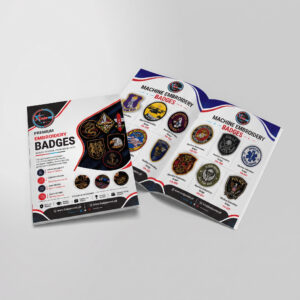
Badges Catalogue Printing Press in Sialkot – Digital & Offset
Read more -

High-Energy Sports Goods & Sportswear Flyer Design in Sialkot
Read more -
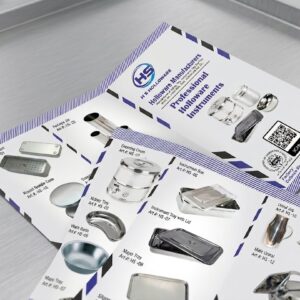
Hollowware Pamphlet Design in Sialkot | Folded Medical Flyer Printing – Malik Art
Read more -

Premium Flyer Design for Dental & Surgical Instruments in Sialkot
Read more -
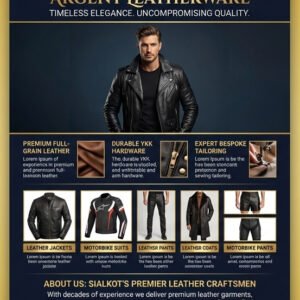
Premium Leather Garments Flyer Design & Printing in Sialkot | Malik Art Press
Read more -
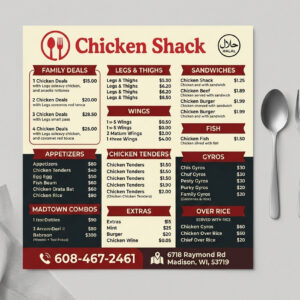
Professional Food Menu Printing Services in Sialkot | Custom Restaurant Menu Printing
Read more -
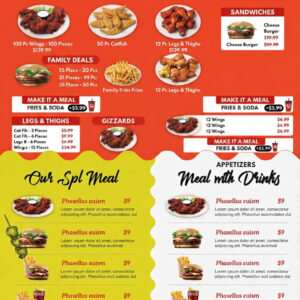
Restaurant Fast-Food Menu Design 2026 | Custom Printing Sialkot – Malik Art
Read more