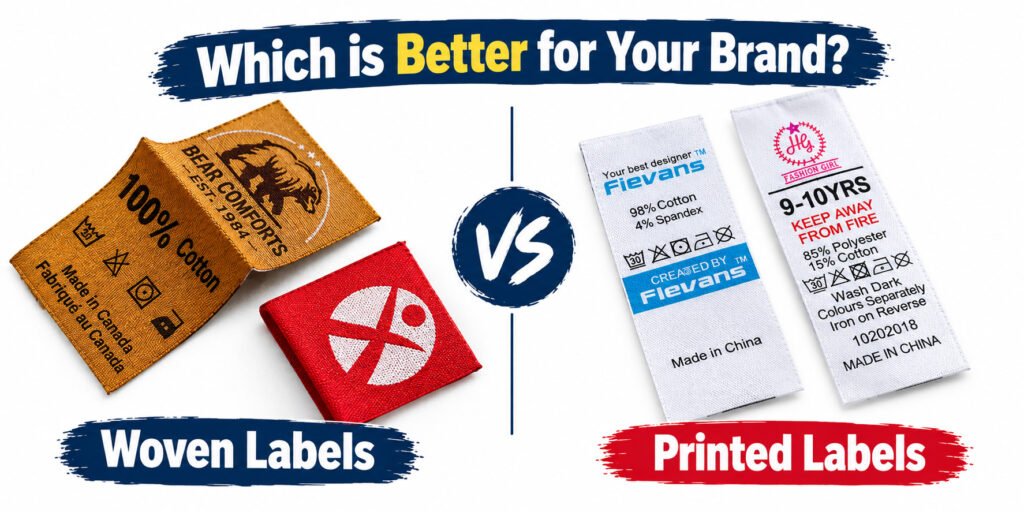
Woven Labels vs Printed Labels: Which Is Better for Your Brand?
Walk through any garment factory in Sialkot and you will see the same scene: a stack of hoodies ready for export, and one small decision still pending — what goes inside the collar. That little piece of fabric carries your logo, your size, your fibre content and your wash instructions. Get it right and the buyer feels quality before they even try the garment on. Get it wrong, and a premium jacket suddenly feels like a market copy.
At Malik Art, we have been producing labels in Sialkot since 1954, and we still hear the same question from exporters every week: woven labels vs printed labels — which one is actually better? The honest answer is that neither one is better. They are built for two completely different jobs, and most professional brands end up using both.
This guide explains the difference in plain language, with real specifications, a full comparison table, and the pricing and MOQ ranges Pakistani exporters ask about most.
What Are Woven Labels?
A woven label is created on a loom, where coloured yarn is interlaced to build the letters, logo and care text directly inside the fabric. Nothing is printed on top — the design is the fabric. Because the yarn runs through the weave, your branding cannot peel, crack or rub off.
Woven labels are the traditional choice for neck labels, hem labels and side-seam branding on apparel that has to look and feel premium.
Woven label materials and options we produce
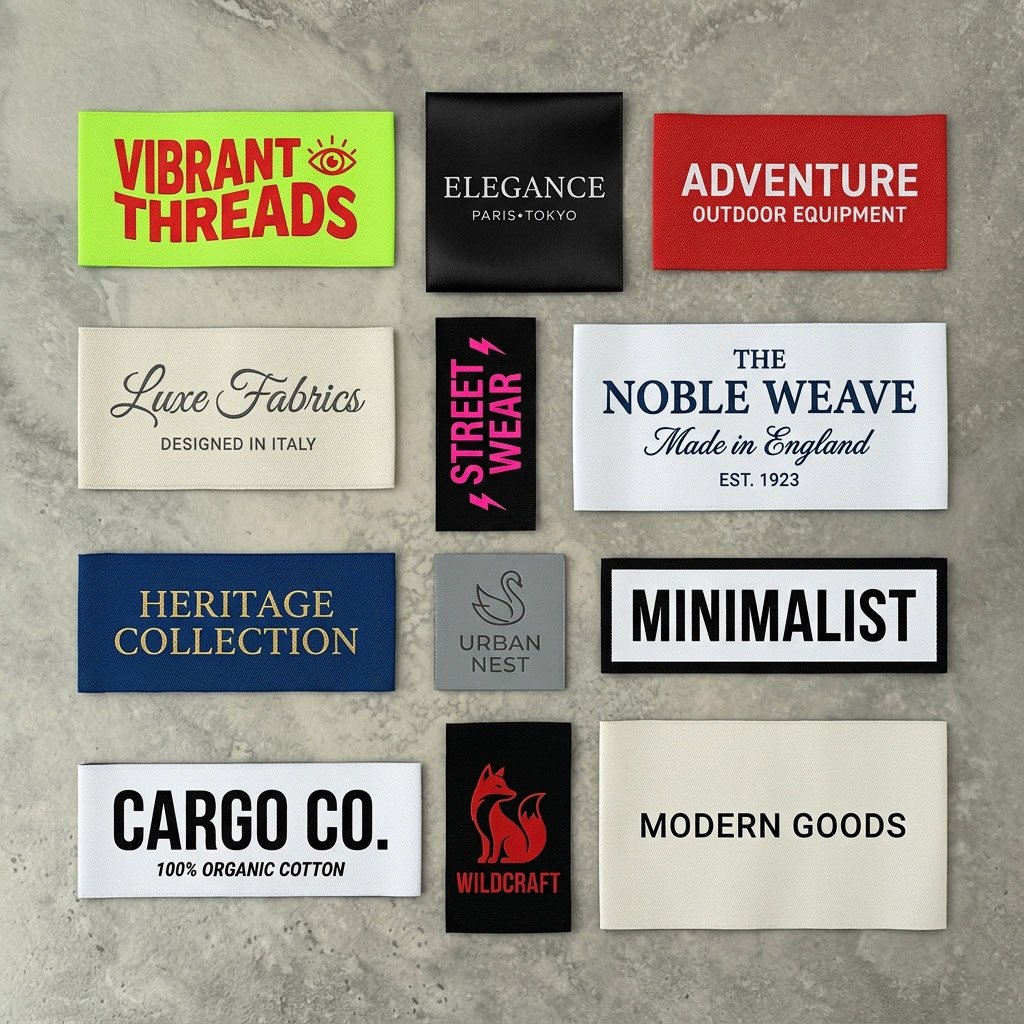
In our own production we work with damask, satin, taffeta, polyester and soft cotton-look yarn. Damask gives the sharpest logo detail and the most premium hand-feel. Satin feels smooth and slightly glossy against the skin. Taffeta is the most economical option. Cotton-look yarn is soft enough for kidswear and lingerie.
- Fold styles: straight cut, end fold, centre fold, manhattan fold and mitre fold
- Colours: up to 8 Pantone-matched yarn colours in a single label
- Backing: sew-on, iron-on or heat-seal backing options
- Sizes: fully custom widths and lengths, made to your garment
- MOQ: sampling supported, with bulk runs starting as low as 1,000 pieces
If your logo needs to stay sharp after 30+ industrial washes, this is the label your brand should be wearing. You can review our full specifications for custom woven labels or send us your artwork for free sample advice.
What Are Printed Labels?
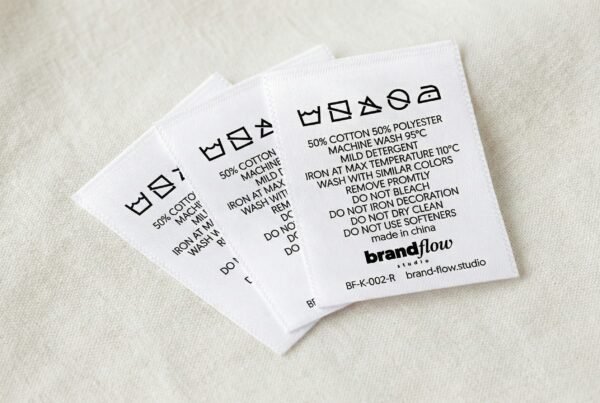
A printed label starts life as a roll of fabric ribbon — usually satin, taffeta or cotton — and your artwork is printed onto the surface. Thermal transfer printing uses a heated print head and a ribbon to fuse ink into the fabric. Screen printing lays thicker ink layers for bold blocks of colour.
Because nothing is woven, fine text, small size runs, barcodes and multi-language care text all become cheap and fast to change.
Common printing methods for printed labels
- Thermal transfer: the industry standard for care labels — crisp small text, sharp wash symbols, excellent wash resistance
- Screen printing: best for bold logos and solid colour blocks on satin or taffeta
- Materials: satin ribbon for a smooth finish, taffeta for economy, soft cotton for skin-friendly comfort
This is why printed labels dominate care and compliance labelling: wash symbols, fibre content, country of origin, size ranges, “KEEP AWAY FROM FIRE” warnings and batch numbers. If your instructions change from order to order, printing is the practical route — which is exactly why our cotton care labels are made in soft, skin-friendly fabric with fully custom symbol layouts.
Woven Labels vs Printed Labels — Side-by-Side Comparison
Below is the comparison we share with buyers every single day. Read it with your own product in mind, not as a general rule — a hoodie brand and a sock exporter need two different answers.
| Feature | Woven Labels | Printed Labels |
|---|---|---|
| Best Use | Brand and logo labels at the neck, hem, sleeve or side seam | Care, size, fibre content, barcode and compliance information |
| Durability | Excellent — woven yarn resists repeated industrial washing and stretching | Good — quality inks hold well, but colour can lighten after many hot washes |
| Look & Feel | Premium, textured and “branded” — ideal for retail outerwear | Clean, smooth, technical and lightweight against the skin |
| Detail Level | Great for logos, monograms and bold text; very fine detail needs high-density weaving | Excellent for small text, multiple languages, symbols and barcodes |
| Colours | Up to 8 Pantone-matched yarn colours per label; gradients are difficult | Unlimited colours, gradients and photographic detail on the ribbon |
| Cost per piece | Higher at low quantity, but falls sharply at 5,000+ pieces | Lower — especially for short runs where the text changes often |
| MOQ | Sampling supported; bulk MOQ as low as 1,000 pieces per design | Very flexible — low MOQs are common for care and size labels |
| Turnaround Time | 3–5 working days for sampling; 10–14 working days for bulk export runs | Fast, especially for repeat care-label orders |
| Best For (industry) | Sportswear, hoodies, jackets, tracksuits, denim, gloves, caps, kidswear | Care and compliance labelling for all garments, plus new fashion startups |
When to Choose Woven Labels
Choose woven when your label is part of the product experience, not just an instruction tag:
- Your logo is the product. Premium hoodies, jackets and tracksuits get inspected inside the collar first — a damask woven logo instantly reads as export quality.
- The garment gets washed hard. Sportswear, gym wear, workwear, gloves and kidswear go through repeated washes, and printed branding on those items can dull over time.
- You want a premium retail finish. High-density weaving with a manhattan or centre fold gives that soft, raised, “designer” feel buyers associate with big brands.
- You need consistency across sizes. One woven design can be used as the neck label on every SKU, so your brand looks identical from XS to XXL.
- You are building a long-term brand. The setup cost is spread across repeat production runs, so the per-piece value improves every season.
When to Choose Printed Labels
Choose printed when information matters more than texture:
- You need care and compliance information. Fibre content, wash symbols, country of origin and safety warnings are all printed clearly and accurately.
- Your text changes often. New fibre blends, new size ranges or new languages for different export markets can be updated without new weaving setup.
- You are a startup testing a first collection. Printed labels allow low MOQs and quick changes, so you can test the market before investing in woven tooling.
- You need size and barcode labels. Printing keeps barcodes scannable for retail and warehouse systems and makes size runs easy to reorder.
- Comfort is the priority. Soft printed satin or cotton care labels sit flat at the side seam without scratching the skin.
Why Most Brands Use Both
The experienced buyers we work with rarely choose one. They use both labels in the same garment, and this is the strategy we recommend to almost every client.
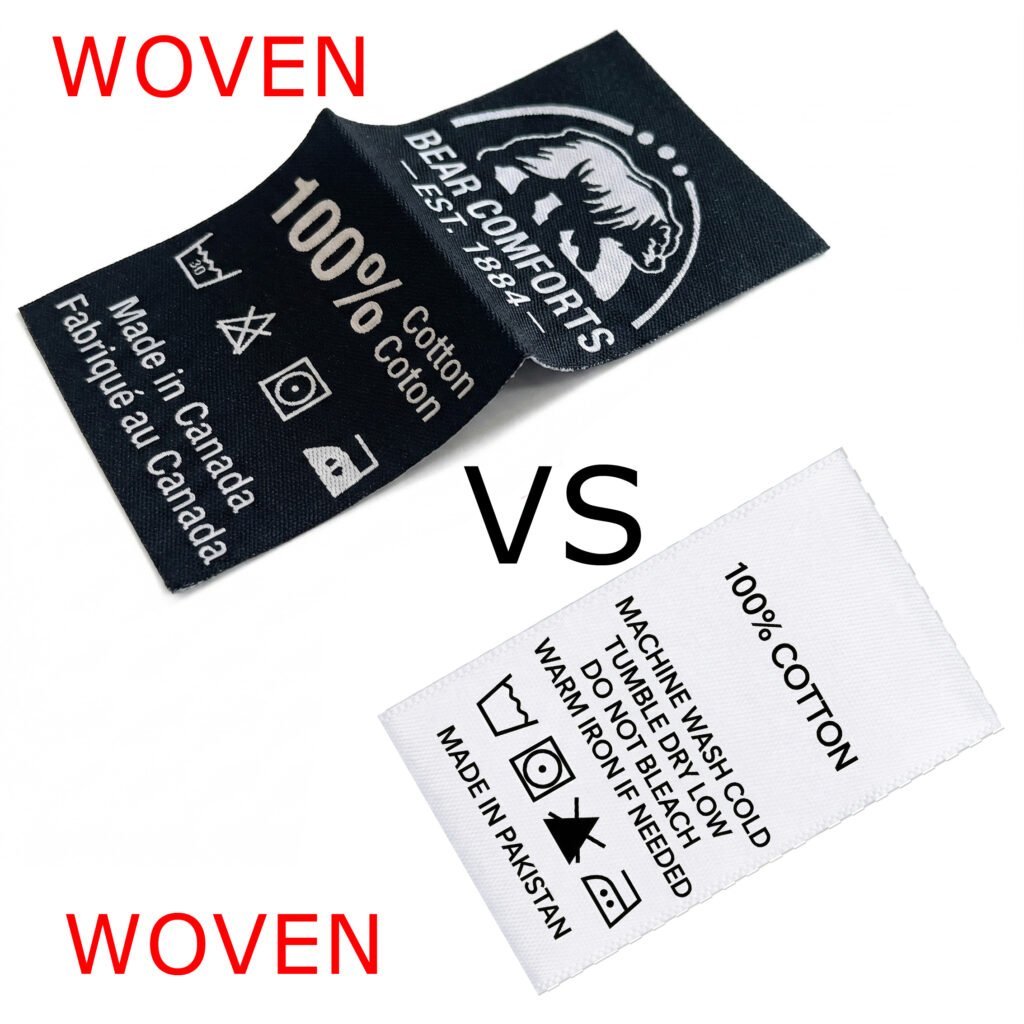
The woven label goes at the neck or inside the waistband, where branding is visible and touchable. The printed care label goes at the side seam, where the buyer reads fibre content, wash symbols and size information. Woven protects your brand identity; printed delivers your legal and care information.
From a costing point of view, this also makes sense. A long care text with five wash symbols in three languages is expensive to weave but very cheap to print. Your logo, on the other hand, deserves the weave. Splitting the two jobs keeps your garment premium without inflating your label budget.
A practical tip we give every exporter: lock your woven label design so it never changes across orders, and keep the printed care label flexible so it can be updated per buyer, per market. You can explore the rest of our Labels Hub to see woven labels, care labels, barcode labels and tag cards side by side.
Pricing & MOQ Guide for Pakistan Exporters
Label pricing depends on size, fold style, number of yarn colours, artwork detail, material and quantity — anyone quoting a single fixed price without seeing your design is only guessing. That said, here are realistic market indication ranges we see in Pakistan so you can plan your garment costing.
Woven labels — market indication (per piece)
- 250 pcs: approx. PKR 8–14 per label
- 500 pcs: approx. PKR 6–11 per label
- 1,000 pcs: approx. PKR 4–8 per label
- 5,000 pcs and above: best per-piece pricing, quoted per design
Printed care labels — market indication (per piece)
- 1,000 pcs: approx. PKR 6 per label
- 10,000 pcs: approx. PKR 5 per label
- 20,000 pcs and above: lower still, quoted per order
In export currency terms, that works out to roughly US$0.015–0.05 per woven label and US$0.018–0.03 per printed care label at typical export quantities, depending on size and colours.
Please note: these are market indications for budgeting only — not a Malik Art quotation. Send your artwork, size and quantity on WhatsApp and we will quote your exact label the same working day.
How to reduce your label cost
- Consolidate SKUs — one woven design across the whole collection instead of ten small designs
- Increase quantity — most of the cost sits in setup, not in the yarn or ink
- Reduce yarn colours to three or four where your logo allows it
- Use taffeta or printed cotton for care labels instead of woven
Why Choose Malik Art for Your Labels?
Malik Art is a Sialkot printing press established in 1954, now serving the second and third generation of garment brands. Here is what that experience means for your order:
- 70+ years in the trade — established in 1954 and trusted by exporters for three generations
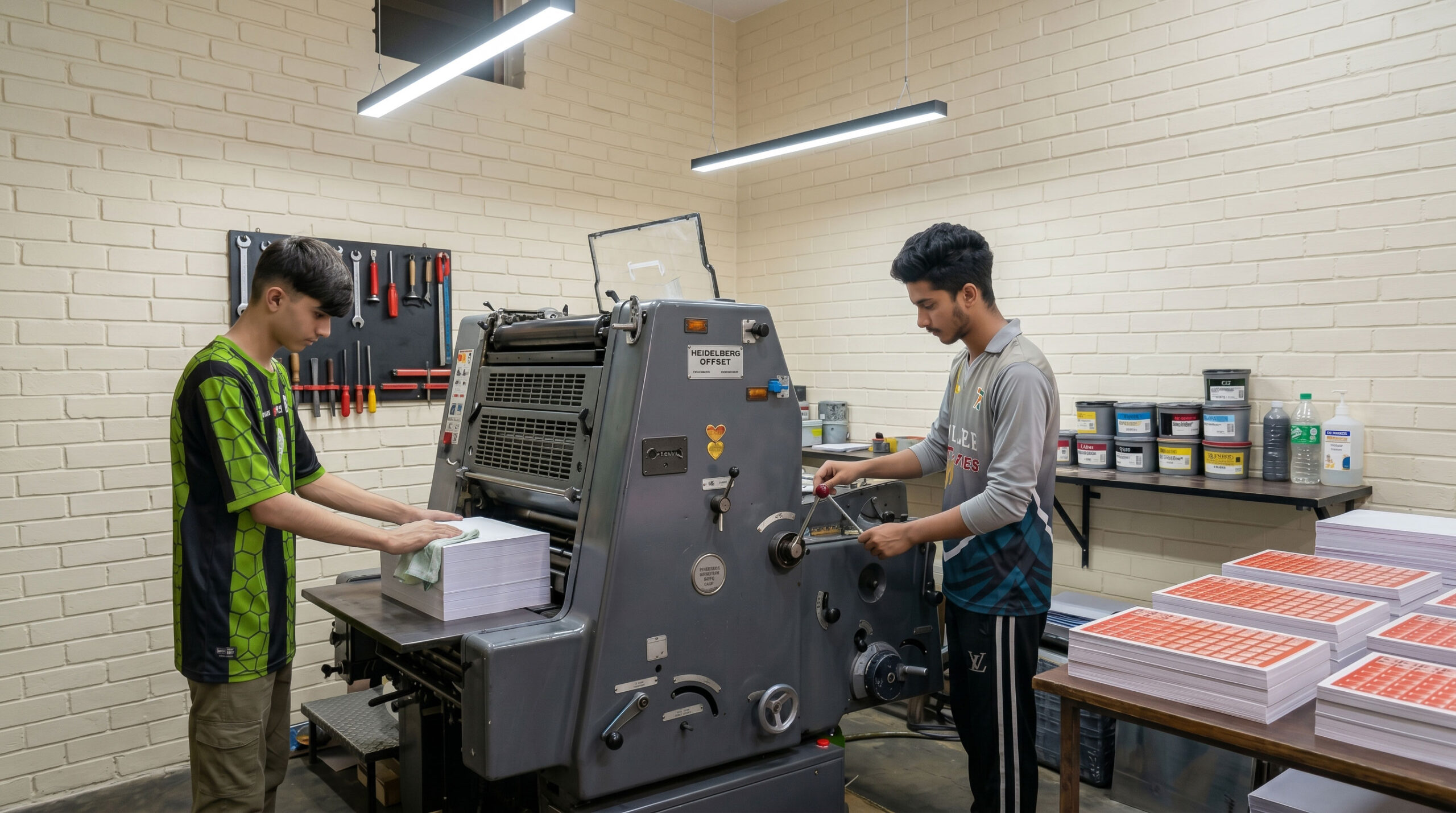
- In-house production — woven labels, printed care labels, barcode labels, hang tags and offset printing under one roof, on Heidelberg machinery
- Export quality — labels, tag cards and packaging supplied to clients across 30+ countries
- Free design support — send your logo (AI, PDF or high-res PNG) and our team prepares a print-ready layout at no extra cost
- Fast WhatsApp response — most quotations are sent the same working day
- Small and bulk friendly — sampling and short custom runs alongside high-volume export orders
You do not need to be a big exporter to work with us. A startup ordering its first 500 labels gets the same attention as a 50,000-piece export run. To discuss materials, colours or sampling, you can Contact Malik Art at Green Wood Street, Sialkot 51310, Punjab, Pakistan.
FAQs: Woven Labels vs Printed Labels
Which is more expensive, woven or printed labels?
Printed labels are cheaper at low quantities because there is no weaving setup cost. Woven labels cost more initially, but the price drops sharply at 5,000+ pieces, which makes them very competitive for large export runs.
What is the minimum order quantity for woven labels?
Sampling is supported for product development, and bulk woven label MOQ can be as low as 1,000 pieces per design depending on size, fold style and number of yarn colours.
Can printed care labels survive washing?
Yes. Good thermal transfer printing is designed to survive normal domestic washing. We recommend checking the label after 30 washes if your garment is industrial-washed, and choosing a woven or coated option for extreme conditions.
Which label is better for care instructions?
Printed labels are better for care instructions. Wash symbols, fibre content and multi-language text are clearer, cheaper to update and easier to read on printed satin, taffeta or cotton.
Can you match my exact brand colours?
Yes. Woven labels can be produced with up to 8 Pantone-matched yarn colours in a single label, and printed labels can match your brand colour references on the ribbon.
How long does label production take?
Sampling usually completes in 3–5 working days. Bulk export orders typically ship within 10–14 working days once artwork and colours are approved. Urgent production is possible on request.
Do you deliver labels outside Pakistan?
Yes. Malik Art has supplied labels and printing to garment manufacturers and brands in 30+ countries, with export documentation and air or sea freight coordination from Sialkot.
Final Word: Choose the Label That Serves Your Garment
If you want the short version: woven labels for branding, printed labels for information, and both together for the professional finish that export buyers expect. Your neck label is your signature; your care label is your responsibility. Do not compromise on either one.
Whether you need 500 labels for a first capsule collection or 50,000 for an export shipment, the right time to get your label right is before the garment goes into production — not after.
💬 WhatsApp Quote Now → +92-333-8617208
Send us your logo, label size, quantity and material preference on WhatsApp, and our Sialkot team will send you a quotation and a sample recommendation — usually the same working day.